

Tim Trotter
Cessna 172 Rental: What to Know Before You Book
The reservation calendar says Cessna 172, but that alone does not tell you whether the airplane fits your flight. The assigned aircraft may have a different panel than the one you trained in, your passenger and baggage plan may change the performance picture, and your recent experience will shape the checkout.
A good Cessna 172 rental starts before you choose a date. At Vegas Aviation, we help you match the mission, aircraft, equipment, and checkout plan so you know what to prepare before arriving at North Las Vegas Airport for your rental. This guide focuses on choosing and preparing for the 172 itself; our broader guide explains the full Las Vegas aircraft rental checkout and booking process.
Make Sure the Airplane Fits the Flight You Actually Want
The Cessna 172 is a practical rental option for many pilots, but the mission still comes first. A local proficiency flight with one pilot is a different planning problem from a summer cross-country with passengers, bags, and a firm arrival time.
Before reserving from our Cessna 172N/P rental fleet, write down the flight you are trying to make:
- Purpose
Local proficiency, instruction, sightseeing, or cross-country travel - People and baggage
Who is flying and what needs to come along - Route
Terrain, airports, fuel options, and alternates - Timing
Preferred departure and return windows, plus weather flexibility - Experience
Recent time in a 172 and familiarity with similar equipment
The right answer may be a Cessna 172, a lesson first, a lighter load, a different departure time, or a different day. That is useful planning, not a setback. Our fleet overview can help you see the aircraft types we operate before you contact the rental team.
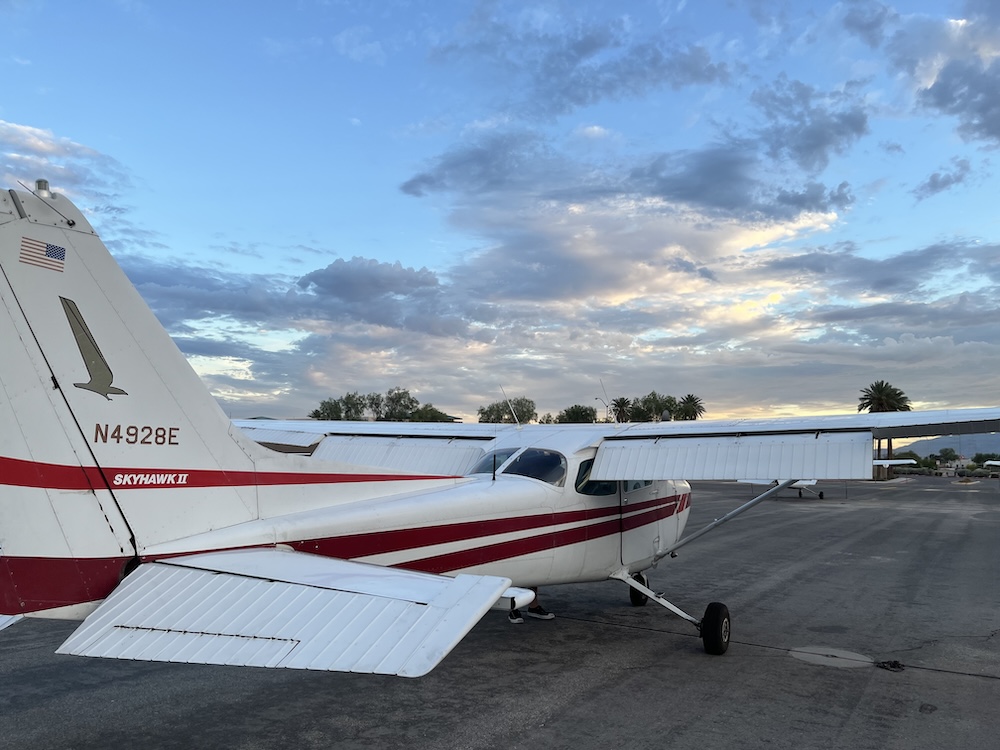
Start with the passengers, baggage, route, and timing rather than choosing an airplane by name alone.
Prepare for the Panel
Two airplanes can both be Cessna 172s and still ask different things of the pilot. Avionics, radios, displays, GPS equipment, and cockpit layout can vary, even within one rental fleet.
Our Cessna rental options include equipment such as Garmin G5 displays, Garmin 430W GPS units, a GNX 375, a GNC 255A, and a GTX 335. That does not mean every aircraft carries the same combination. When you request a reservation, confirm the available aircraft and ask which panel you should prepare to use.
If the GPS navigator, electronic display, or radio stack is unfamiliar, say so before checkout. A little focused ground preparation can prevent the flight from turning into button-by-button discovery while the engine is running. Review the equipment guides, bring questions, and be ready to demonstrate that you can manage the panel without losing basic aircraft control.
Pilots who want structured practice can use checkout time or additional instruction to close the gap. If you are still building foundational skills rather than renting independently, our Private Pilot Certificate training offers the better starting point.
Give Your Checkout CFI an Honest Starting Point
Every renter completes a flight checkout with one of our CFIs. The checkout is built around demonstrated proficiency, so an accurate picture of your experience helps us plan useful ground and flight time.
When you contact the Vegas Aviation team, be ready to discuss:
- Pilot certificate and applicable ratings
- Flight review status and relevant medical qualification
- Recent takeoffs, landings, and flight time
- Time in Cessna 172 aircraft or similar airplanes
- Experience with the available avionics
- The type of flying you plan to do after checkout
There is no fixed hourly minimum for the checkout. Its length and content depend on your experience, aircraft familiarity, and the instructor’s assessment. A pilot who flies a similarly equipped 172 regularly may follow a different path from someone returning after a long break.
The flight may include aircraft procedures, normal and crosswind operations, slow flight or stalls, emergency procedures, checklist use, and avionics management. Treat it as useful proficiency time.
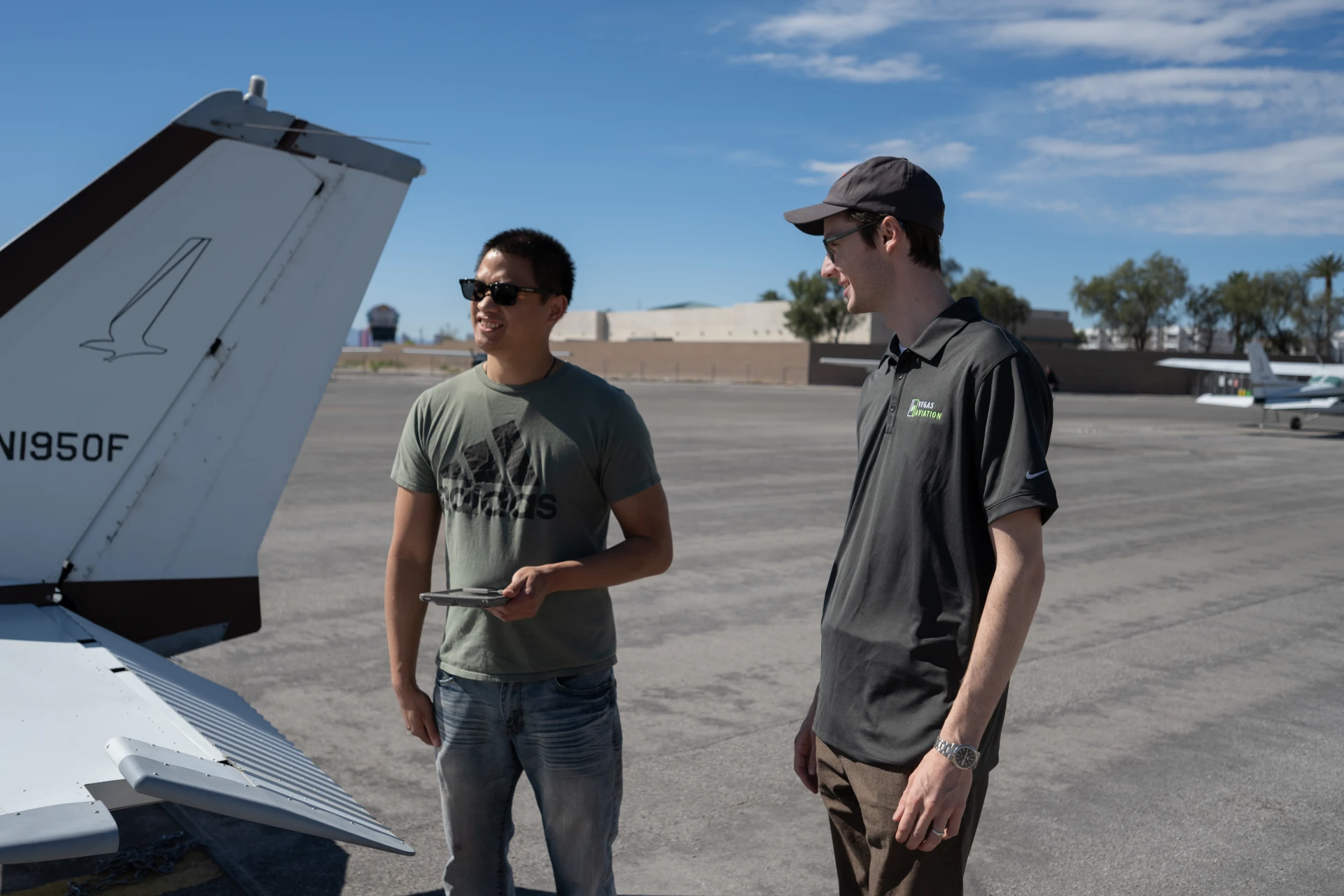
A clear experience summary helps your checkout CFI focus on the aircraft, equipment, and skills most relevant to your rental.
Run the Numbers for the Assigned Aircraft and Conditions
Familiarity with the Cessna 172 does not replace flight-specific planning. Use the approved information for the assigned aircraft and current conditions when calculating weight and balance, takeoff and landing performance, fuel, and route margins.
This is especially important in Southern Nevada, where temperature, density altitude, winds, terrain, runway choice, and passenger load can materially change the plan. A flight that works comfortably with one pilot in cooler conditions may need a different load or departure time when the day gets hotter.
Before dispatch, work through:
- The assigned aircraft’s documents, limitations, and performance information
- Passenger, baggage, and fuel loading
- Takeoff and landing distance for the expected runway and conditions
- Weather, winds, turbulence, terrain, and alternate options
- Fuel requirements and realistic reserves
- Your own recency, comfort, and personal minimums
Our fleet and maintenance team supports the aircraft on the ground, but the pilot in command still makes the flight-specific decision about whether the aircraft is in condition for safe flight and whether the plan should depart. Changing the load, route, time, or day is part of sound rental flying.
Compare the Real Rental Cost, Not Only the Hourly Rate
Our Cessna 172N/P rental rate starts at $175 per hour, but a useful budget includes more than the headline number. Rates can change, and the total may also involve checkout instruction, renter insurance, or training needed before approval.
Before booking, confirm with our aircraft rental team:
| Planning item | What to clarify |
|---|---|
| Aircraft rate | Current rate and how flight time is billed |
| Checkout | Instructor rate and the expected starting plan |
| Fuel | How fuel is handled for the reservation |
| Scheduling | Departure, return, overnight, or minimum-use policies |
| Insurance | Current coverage requirement and proof needed |
| Training | Whether additional instruction is recommended before rental |
Our policy requires non-owned aircraft insurance, commonly called renter insurance, with at least $50,000 in aircraft damage liability. Confirm the current requirement before purchasing a policy, you can also find more insurance related information in our aviation insurance partnerships page.
If your Cessna flying is part of additional training rather than a personal rental, you can also review our flight training financing partnerships. Financing eligibility and terms depend on the provider and the training plan, so treat that as a separate conversation from an ordinary rental reservation.
Reserve the Aircraft, Then Confirm What You Will Fly
Checkout approval and aircraft scheduling are related, but they are not the same thing. Reserve early when the date or equipment matters, especially for a cross-country plan, a specific avionics configuration, or a flight that needs extra instructor support.
Before the rental day, confirm the aircraft, panel, departure and return window, current rate, dispatch steps, fuel expectations, and any trip-specific policies with our rental team. Build enough flexibility into the plan that weather, maintenance, or a scheduling change does not force a poor decision.
Bring your pilot documents, insurance evidence, and flight-planning materials. Arrive ready to review the assigned airplane rather than assuming it will match the last Cessna 172 you flew.
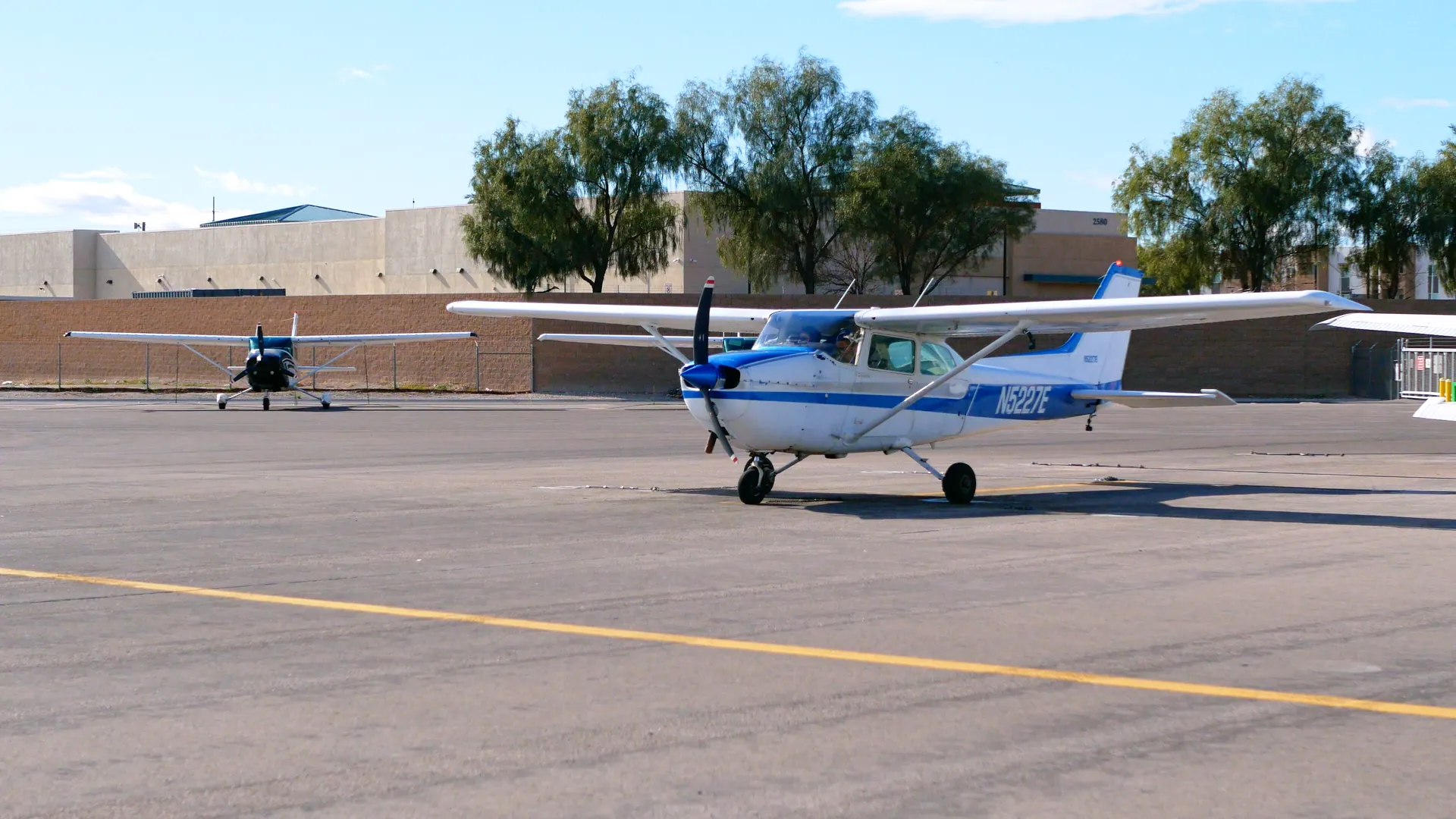
A strong reservation plan includes the specific aircraft, panel, schedule, loading, and conditions expected for the flight.
Cessna 172 Rental Questions
Can I rent a Cessna 172 immediately after contacting Vegas Aviation?
Plan to complete a checkout with one of our CFIs first. Your documents, renter insurance, recent experience, aircraft familiarity, demonstrated proficiency, and scheduling all affect when you can begin renting. Contact us before setting firm trip dates.
Do all Cessna 172 rentals have the same avionics?
No. Equipment can vary between aircraft, including displays, GPS navigators, radios, and transponders. Confirm the available airplane and panel before your reservation, then prepare for that configuration.
How long will my Cessna 172 checkout take?
There is no fixed hourly minimum. Checkout time depends on your recent experience, familiarity with the aircraft and avionics, and demonstrated proficiency. Share an honest flying history with our team so we can plan a useful starting point.
How much does it cost to rent a Cessna 172?
Our Cessna 172N/P rate starts at $175 per hour. The current rate, checkout instruction, insurance, and trip policies can affect the total. Contact our rental team for the current details before building a firm budget.
Do I need renter insurance?
Yes. Our current policy requires non-owned aircraft insurance with at least $50,000 in aircraft damage liability. Requirements can change, so confirm the current limit. You can also review our renter insurance partnerships for additional information.
Is a Cessna 172 suitable for a hot-weather cross-country?
That depends on the assigned aircraft, loading, runway, route, terrain, weather, and pilot. Use the aircraft’s approved information and current conditions to calculate performance rather than relying on a generic model reputation. Our rental team can help you identify which aircraft information you need for planning.
Schedule Your Cessna 172 Checkout
The best rental conversation starts with the flight you want to make and the experience you bring to it. Tell us your recent flying history, Cessna and avionics experience, preferred dates, and intended mission.
Contact Vegas Aviation to discuss current Cessna 172 availability and schedule your checkout.


